Read more about this book
External links go to the book's listing on the publisher's, bookseller's, or library platform of record. Kineno does not host or distribute book files.
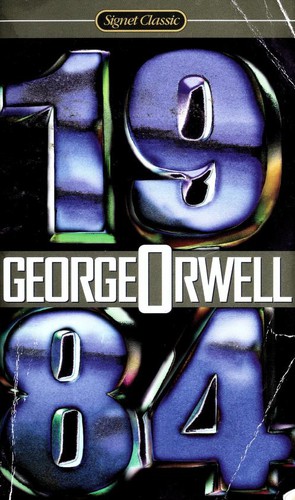
1984
by George Orwell
Editorial review
Orwell's dystopia is no longer a hypothetical — it reads in 2024 like a field manual for the architectures of attention, propaganda, and surveillance we already live inside. What endures is not the spectacle of Big Brother but the quieter horror of language itself being narrowed until certain thoughts can no longer be formed. A book that rewards rereading at every life stage.
AI-generated summary
In a totalitarian superstate ruled by 'The Party,' a low-level functionary named Winston Smith begins a forbidden affair and a private rebellion of memory against an apparatus that controls history, language and perception itself. His attempt to remain inwardly free becomes a study in how regimes do not merely punish dissent but dismantle the very capacity for it.
Key takeaways
- 1
Control of language is control of thought — 'Newspeak' is not satire, it is mechanism.
- 2
Surveillance succeeds when self-censorship becomes habitual.
- 3
Historical memory is a political resource; the past is contested terrain.
- 4
Private intimacy is itself a form of resistance to mass systems.
The right reader
Anyone interested in politics, media, technology ethics, or the history of the 20th century. Essential for journalists, designers of large-scale systems, and readers who want a vocabulary for the present moment.
What it touches
How it reads
Bleak, urgent, prophetic.
Reading difficulty: Moderate


